
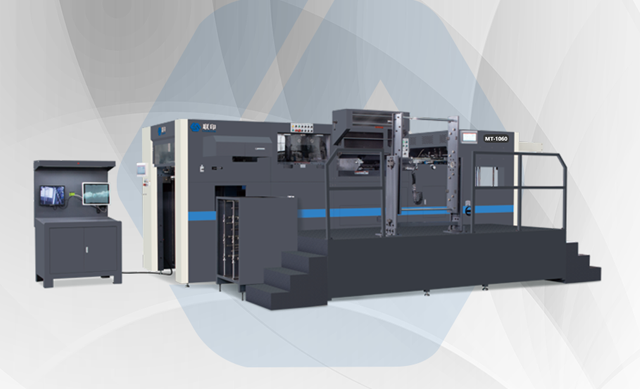
Post press foil stamping equipment is a core category of finishing machinery for commercial printing, packaging, label production and specialty graphics. This in‑depth industry guide provides SEO‑optimized, manufacturer‑neutral information for buyers, distributors and factories that focus on wholesale foil stamping machines, components and post press systems.
Post press foil stamping equipment refers to machines and systems that apply metallic or pigment foils to printed or unprinted substrates after the main printing process. The term “post press” identifies finishing operations that happen downstream of offset, digital, flexographic or gravure printing. Foil stamping enhances visual appearance, tactile feel and brand value of printed products.
Industry‑leading wholesale manufacturers and suppliers design foil stamping equipment for integration into:
Typical finished products processed with post press foil stamping machines include:
Wholesale factories and suppliers typically categorize post press foil stamping equipment according to the foil transfer technology used. The three most important process families are hot foil stamping, cold foil transfer and digital foil enhancement.
Hot foil stamping is the traditional and most widely used method. It uses heat, pressure and a metal stamping die to transfer a thin foil layer onto a substrate.
Core elements of a hot foil stamping machine:
Hot foil stamping delivers outstanding metallic brilliance, precise edges and compatibility with embossing for multi‑level decorative effects.
Cold foil transfer uses UV‑curable or pressure‑sensitive adhesive instead of heat. The adhesive is printed on the substrate in the desired pattern, the foil is pressed against the adhesive, and the non‑bonded areas are removed.
Cold foil systems are often integrated into:
Key advantages of cold foil include higher speed potential, lower energy consumption and easier registration with multicolor printing for large area metallic effects.
Digital foil stamping, also called digital foil enhancement or toner‑based foiling, relies on selective adhesion of foil to laser toner, UV varnish or inkjet‑printed adhesive. It is ideal for:
Digital foil machines are popular in digital print shops and in factories that require frequent design changes with minimal tooling.
Industry‑leading wholesale manufacturers, suppliers and factories generally organize their foil stamping machinery portfolio into several mechanical and application‑driven categories.
Sheet‑fed hot foil stamping equipment handles cut sheets of paperboard, cardboard, plastic or specialty substrates. These machines are common in folding carton and commercial print factories.
| Format Class | Max Sheet Size (mm) | Min Sheet Size (mm) | Substrate Range (gsm) | Target Applications |
|---|---|---|---|---|
| Small Format | 520 × 740 | 210 × 297 | 100 – 600 | Greeting cards, tags, small cartons, stationery |
| Medium Format | 740 × 1040 | 300 × 400 | 120 – 800 | General folding cartons, book covers, commercial print |
| Large Format | 1060 × 1450 | 450 × 550 | 150 – 2000+ | High‑volume packaging, display, corrugated litho‑lam |
Web‑fed foil equipment processes continuous rolls of substrate. It is widely used in label, flexible packaging and narrow‑web markets.
Flatbed and clamshell presses are robust solutions frequently supplied by factories that specialize in heavy‑duty post press equipment.
For industrial packaging plants, combination equipment that includes foil stamping, embossing and die‑cutting in one pass can significantly increase efficiency. Wholesale suppliers often offer integrated machines for:
Post press foil stamping machinery from industry‑leading manufacturers is engineered as a system consisting of mechanical, electronic and consumable components.
Foil stamping equipment performance strongly depends on the quality of consumables:
Factories, converters and print providers invest in post press foil stamping equipment for multiple strategic and commercial benefits.
Post press foil stamping equipment is used across multiple industry verticals. Wholesale manufacturers and suppliers tailor different machine configurations to specific applications.
| Segment | Typical Products | Preferred Equipment Type | Key Requirements |
|---|---|---|---|
| Folding Cartons | Cosmetic boxes, perfume cartons, chocolate packaging | Sheet‑fed hot foil stamping, combination die‑cutting & foil | High speed, accurate registration, multi‑up layouts |
| Labels | Wine labels, spirits, craft beer, personal care labels | Narrow‑web cold foil units, hot foil modules on label presses | Fine detail, long runs, inline with printing |
| Books & Stationery | Hardcover titles, diaries, notebooks, greeting cards | Sheet‑fed hot foil, clamshell presses, digital foil systems | Short and medium runs, frequent design change |
| Rigid Boxes | Gift boxes, luxury packaging, electronics boxes | Large format hot foil stamping, flatbed presses | Thick substrates, embossing, deep impression |
| Security & Brand Protection | Certificates, tickets, tax stamps, security labels | Specialized holographic foil stamping equipment | Precision registration, tamper‑evident features |
When evaluating foil stamping machines from wholesale manufacturers, buyers should carefully review specification sheets. The following tables summarize important specs commonly highlighted by industry‑leading suppliers and factories.
| Parameter | Entry-Level Range | Mid-Range | High-End / Industrial |
|---|---|---|---|
| Max Sheet Size | 520 × 740 mm | 740 × 1040 mm | 1060 × 1450 mm or larger |
| Max Stamping Speed | 1,500 – 3,000 sheets/hour | 4,000 – 6,000 sheets/hour | 6,000 – 8,000+ sheets/hour |
| Foil Reels | 2 – 4 reels | 4 – 8 reels | 8 – 12+ reels, independent control |
| Max Foil Width | 300 – 400 mm | 400 – 600 mm | 600 – 800+ mm |
| Stamping Pressure | Up to 120 tons | 120 – 200 tons | 200 – 300+ tons |
| Temperature Range | 50 – 160 °C | 50 – 180 °C | 50 – 200 °C, multi‑zone |
| Register Accuracy | ±0.20 mm | ±0.15 mm | ±0.10 mm or better |
| Substrate Thickness | 90 – 600 gsm | 120 – 1200 gsm | 150 – 2000 gsm or corrugated |
| Feature | Basic | Advanced | Premium / Smart Factory Level |
|---|---|---|---|
| Job Presets | Manual settings with counters | Recipe storage for repeat jobs | Cloud‑enabled database, automatic download from MIS |
| Foil Advance Control | Mechanical adjustment | Servo‑driven with digital input | Optimized by software, waste minimization algorithms |
| Register Control | Mechanical side and front lays | Motorized lays, electronic side guides | Camera‑based register system with closed‑loop adjustment |
| Diagnostics | Basic fault messages | On‑screen troubleshooting and logs | Remote service, predictive maintenance and analytics |
| Safety Systems | Mechanical guards and emergency stops | Light curtains, safety PLC | Integrated risk management and compliance reporting |
In the global market for post press foil stamping equipment, wholesale manufacturers and suppliers commonly organize their offerings to serve OEM export, local distribution networks and end‑user factories.
Many factories supplying foil stamping machinery operate under OEM (Original Equipment Manufacturer) and ODM (Original Design Manufacturer) business models. This allows regional distributors and global brands to source equipment under their own labels.
Industry‑leading suppliers of post press foil stamping equipment emphasize long‑term support:
Selecting the right foil stamping machine from wholesale manufacturers or factories requires careful evaluation of production requirements, substrate types and desired decorative effects.
Factories using post press foil stamping equipment must maintain strict quality standards to meet brand owner expectations. Consistent performance also protects the reputation of wholesale machinery manufacturers and suppliers.
Industry‑leading manufacturers and wholesale suppliers continuously adapt their foil stamping equipment to evolving market demands.
Hot foil stamping uses heated dies and pressure to bond foil to the substrate. Cold foil relies on an adhesive image and pressure, usually cured with UV light. Hot foil is favored for maximum brilliance and embossing, while cold foil is ideal for high‑speed, large‑area metallic effects inline with printing.
The strongest demand comes from folding carton packaging, labels, luxury goods, cosmetics, wine and spirits, book publishing and security printing. Many factories serving these markets source foil stamping machines from wholesale manufacturers and specialized suppliers.
Traditional foil stamping required highly experienced operators to adjust temperature, pressure and register manually. Modern post press foil stamping equipment from industry‑leading manufacturers reduces the skill barrier through automation, presets and digital control, while still benefiting from trained personnel.
Yes. Registered foil and embossing is a common premium effect. Many combination machines and tooling solutions allow simultaneous hot foil stamping and embossing in one pass, sometimes described as “foil embossing.”
Routine maintenance includes cleaning dies, checking foil handling systems, lubricating moving parts, verifying temperature stability and inspecting safety systems. Wholesale manufacturers and factories typically provide maintenance schedules and documentation for each model.
Post press foil stamping equipment is an essential finishing investment for any factory, printer or converter that serves premium packaging, labels and specialty print markets. By understanding process types, equipment categories, key specifications and the service structures of industry‑leading wholesale manufacturers and suppliers, buyers can select machinery that aligns with volume, substrate and branding requirements.
Whether the focus is high‑speed hot foil stamping for folding cartons, cold foil transfer for label webs or digital foil for short‑run personalization, post press foil technology continues to deliver strong visual impact and added value across global printing and packaging supply chains.
```
رقم الاتصال +86 18713883276(نفس الواتس اب) البريد: tslianshun@126.com
العنوان: قرية CAI he dong، مدينة CAI ting Qi AO، مقاطعة Y UT Ian، مدينة Tangshan، مقاطعة Hebei
حقوق الطبع والنشر © 2025 Tangshan Lianshun Printing Machinery Manufacturing Co., Ltd. جميع الحقوق محفوظة


يستخدم هذا الموقع ملفات تعريف الارتباط لضمان حصولك على أفضل تجربة على موقعنا.

 English
 Español
 Portugues
 Pусский
 中文



 هاتف
تعليق
(0)