Automatic Paperboard and Carton Stamping Equipment - High-Quality Wholesale Manufacturers, Suppliers and Factory Picks
Automatic Paperboard and Carton Stamping Equipment – High-Quality Wholesale Manufacturers, Suppliers and Factory Picks
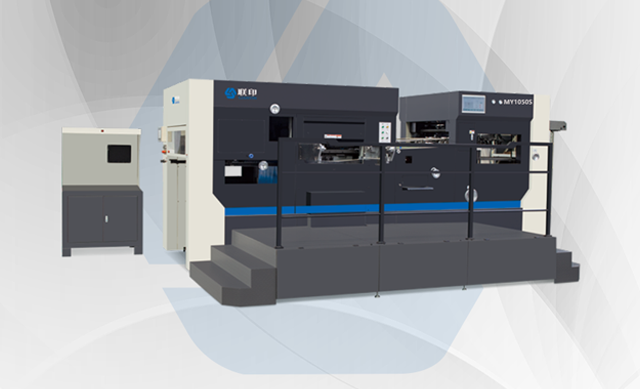
Automatic paperboard and carton stamping equipment is a core category in the carton converting and packaging machinery industry. This long-form guide provides SEO-friendly, industry-neutral information for wholesale buyers, distributors, and factories looking to source high-quality automatic stamping lines without focusing on specific company names.
1. Overview of Automatic Paperboard and Carton Stamping Equipment
Automatic paperboard and carton stamping equipment is used to stamp, emboss, perforate, cut or crease paperboard and corrugated carton materials at high speed. These machines are widely installed in folding carton plants, corrugated box factories, packaging converters, printing houses and brand packaging departments.
In many markets, these systems are also called:
- Automatic paperboard stamping machine
- Automatic carton stamping and die-cutting machine
- Automatic foil stamping equipment
- Carton embossing and stamping line
- Automatic flatbed or rotary stamping press
Wholesale buyers and sourcing managers typically look for robust, high-productivity equipment that can run continuously in factory environments, support a wide range of board grammages, and integrate seamlessly with printing and finishing workflows.
2. Definition and Core Functions
An automatic paperboard and carton stamping machine is an industrial system that automatically feeds sheets or blanks of paperboard or corrugated board, positions them accurately, applies stamping tools (dies, plates, cylinders) under controlled pressure and temperature (for foil), and then delivers finished or semi-finished products with minimal manual intervention.
2.1 Core Functions
- Automatic feeding: Continuous feeding of paperboard sheets from a pile or stack with air-suction or mechanical feeders.
- Alignment and registration: Precision side and front lay systems to guarantee accurate registration with printed graphics.
- Stamping / die-cutting: Application of pressure to a die or stamping plate to create the desired shape, embossing, perforation, creasing, or foil stamping effect.
- Foil transfer (if applicable): Hot foil or cold foil transfer with temperature, pressure and dwell-time control.
- Stripping and waste removal: Automatic removal of waste matrix or skeleton for clean, ready-to-fold blanks.
- Delivery and stacking: Fully automatic delivery section with non-stop stacking systems for continuous production.
2.2 Materials Processed
Typical materials processed by automatic paperboard and carton stamping equipment include:
- Solid bleached sulphate (SBS) paperboard
- Folding boxboard (FBB)
- Coated recycled board (CRB)
- Kraft paperboard
- Microflute and corrugated carton board (E-flute, F-flute, B-flute, etc.)
- Laminated paperboard and specialty boards
3. Key Advantages of Automatic Paperboard and Carton Stamping Equipment
Choosing high-quality automatic stamping equipment from reliable wholesale manufacturers and factory suppliers provides multiple strategic benefits for packaging converters and brand owners.
3.1 Productivity and Throughput
- High speed: Modern automatic carton stamping machines can process thousands of sheets per hour, significantly increasing plant capacity.
- Continuous operation: Non-stop feeder and delivery systems support long production runs with limited downtime.
- Quick job changeover: Tooling systems and preset functions minimize setup times between different carton designs.
3.2 Quality Consistency
- Stable stamping pressure: Servo-controlled pressure systems ensure consistent embossing depth, cutting quality and foil adhesion.
- Perfect registration: Sophisticated register controls guarantee alignment with printed images, barcodes and brand elements.
- Reduced defects: Automation reduces human errors, leading to fewer rejections and higher usable output.
3.3 Labor and Cost Efficiency
- Lower manual handling: Automatic feeding, waste stripping and delivery reduce reliance on manual labor.
- Lower per-unit cost: Higher throughput and reduced waste translate directly into lower cost per carton.
- Energy-efficient designs: Modern machines may include energy-saving drives, intelligent motors and optimized heating systems.
3.4 Flexibility and Customization
- Wide material range: From thin paperboard to thicker corrugated, a single line can often handle diverse substrates.
- Multi-process integration: Combined functions such as die-cutting, creasing, embossing, and hot foil stamping on one platform.
- Modular options: Additional sections like blanking, inline inspection or stripping can be integrated as the factory expands.
3.5 Compliance and Safety
- Safety guards and interlocks: Conformity to mainstream safety standards reduces workplace incidents.
- Dust and waste control: Built-in dust extraction and waste management support clean and compliant production areas.
- Standardization: The use of programmable settings allows consistent quality across multiple production sites.
4. Main Types of Automatic Paperboard and Carton Stamping Equipment
Wholesale manufacturers and factory suppliers generally classify automatic carton stamping equipment into several main types according to process method and configuration.
4.1 Flatbed Stamping and Die-Cutting Machines
Flatbed systems use a flat chase with stamping tools and a flat platen that moves vertically to apply pressure. They are popular for high-precision folding carton production.
- Ideal for intricate shapes and fine details
- Suitable for both paperboard and microflute corrugated
- Commonly used for high-value packaging, cosmetics cartons, pharmaceuticals, and premium food boxes
4.2 Rotary Stamping and Die-Cutting Machines
Rotary machines use rotating cylinders with mounted dies or stamping plates. Board passes through the nip between cylinders, enabling continuous processing.
- High-speed continuous operation
- Often used for corrugated carton plants and long-run jobs
- Well-suited for larger formats and simple box designs
4.3 Hot Foil Stamping Machines
Hot foil stamping equipment adds decorative or security foil onto cartons using heat and pressure. The workflow often integrates with die-cutting and embossing.
- Premium metallic and holographic effects
- Widely used in cosmetics, luxury goods, wine and spirits, and branded gift packaging
- Available in both flatbed and rotary versions
4.4 Cold Foil and Embossing Machines
Cold foil stamping and pure embossing machines provide alternative finishing solutions without using high temperatures, depending on the substrate and ink system used.
- Less heat-related substrate deformation
- Can be integrated inline with some printing processes
- Suitable for sensitive boards or special coatings
4.5 Integrated Multi-Function Stamping Lines
For large factories and high-volume converters, integrated lines combine several finishing functions in one automatic system:
- Die-cutting and creasing
- Hot foil stamping and embossing
- Stripping, blanking and stacking
- Inline vision inspection for registration and defect detection
5. Typical Industrial Applications
Automatic paperboard and carton stamping equipment is essential to many vertical markets and product categories.
5.1 Folding Cartons
- Food and beverage cartons (cereal boxes, snack boxes, beverage carriers)
- Cosmetics and personal care packaging
- Pharmaceutical and healthcare cartons
- Electronics and small appliance boxes
5.2 Corrugated Cartons
- Shipping boxes and e-commerce packaging
- Retail-ready packaging (RRP) and point-of-sale displays
- Heavy-duty industrial and automotive packaging
5.3 Specialty Packaging and Premium Boxes
- Wine and spirits gift boxes
- Luxury rigid box components (inner trays and inserts)
- Confectionery and chocolate packaging
- High-end promotional cartons and sample kits
5.4 Security and Brand Protection
- Holographic foil features for anti-counterfeiting
- Micro-embossing and special texture stamping
- Custom die-cut windows and tamper-evident features
6. Common Technical Specifications
When comparing wholesale offers from different stamping equipment manufacturers and factory suppliers, buyers focus on key technical parameters. The following tables present typical ranges and specification items.
6.1 General Machine Specifications
Parameter |
Typical Range |
Description / Relevance |
|---|
Max sheet size |
750 × 1050 mm to 1650 × 1200 mm |
Determines the largest carton blank that can be processed. |
Min sheet size |
350 × 450 mm to 600 × 800 mm |
Affects suitability for small-format folding cartons. |
Max mechanical speed |
4,000 to 9,000 sheets/hour (flatbed)
Up to 12,000+ sheets/hour (rotary) |
Higher speeds increase productivity but require stable feeds and skilled operation. |
Sheet thickness range |
0.2 – 2.0 mm typical
Up to ~4.5 mm for corrugated |
Covers lightweight paperboard to heavy microflute corrugated board. |
Max stamping pressure |
150 – 600 tons (flatbed) depending on size |
Stronger pressure is needed for thick boards and complex embossing. |
Registration accuracy |
±0.1 mm to ±0.2 mm typical |
Critical for precise alignment with printed graphics and cutting lines. |
Main power supply |
380 – 480 V, 50/60 Hz, 3-phase |
Industrial power standards; check compatibility with local grid. |
Installed power |
25 – 80 kW depending on model |
Indicates energy consumption and infrastructure requirements. |
Machine footprint |
8 – 18 m length × 3 – 6 m width |
Important for factory layout and material flow planning. |
Machine weight |
8 – 30+ tons |
Impacts foundation design and floor load capacity. |
6.2 Hot Foil Stamping Specifications
Parameter |
Typical Range / Option |
Description / Relevance |
|---|
Foil stamping temperature |
80 – 200 °C adjustable |
Different foil types and substrates require specific temperatures. |
Foil feeding direction |
Longitudinal, transverse, multi-directional |
Multi-directional foil feeding saves foil and enables complex layouts. |
Number of foil reels |
2 – 8+ reels |
Multiple reels support multi-color and multi-position stamping. |
Foil tension control |
Analog or servo-controlled |
Precise tension avoids foil wrinkles and mis-registration. |
Max foil width |
Up to full sheet width |
Influences the size and number of stamping areas per pass. |
Dwell time |
Programmable via control system |
Affects foil adhesion and stamping quality. |
6.3 Automation and Control Features
Feature |
Typical Availability |
Impact on Production |
|---|
Touchscreen HMI |
Standard on modern equipment |
Enables easy parameter setting, recipe storage, and error diagnostics. |
Job memory / recipe management |
Standard to advanced |
Reduces setup times for repeat orders and multi-SKU production. |
Auto die-locking and positioning |
Optional to standard on higher-end models |
Speeds up tooling changes and improves registration accuracy. |
Automatic pile turning and non-stop feeder |
Common on high-speed lines |
Allows continuous feeding without stopping the machine for pile changes. |
Automatic waste stripping |
Standard on many flatbed die-cutters |
Removes internal waste and skeleton to deliver ready-to-fold blanks. |
Blanking section |
Optional module |
Separates blanks from the sheet and stacks them in counted piles. |
Register camera and inspection |
Optional inline quality control |
Detects mis-registration, missing foil, or die-cut defects. |
Remote diagnostics |
Increasingly common via Ethernet/IoT |
Allows manufacturer support to reduce downtime and service costs. |
7. How to Select High-Quality Wholesale Manufacturers and Factory Suppliers
When sourcing automatic paperboard and carton stamping equipment at wholesale level, buyers should systematically evaluate manufacturers, suppliers and OEM/ODM factories based on several criteria.
7.1 Technical Capability and Product Range
- Check if the manufacturer offers both flatbed and rotary stamping options, or specializes in a specific segment.
- Evaluate available sizes, speed ranges, and automation tiers to match current and future production needs.
- Review compatibility with various board types and thickness ranges used in your regional market.
7.2 Manufacturing Quality and Standards
- Confirm that machines are built following widely recognized mechanical and electrical standards.
- Ask about in-house machining, assembly and quality control processes.
- Request sample machine photos, demonstration videos, or factory layout diagrams that highlight production capabilities.
7.3 Automation Level and Software Support
- Decide whether fully automatic, semi-automatic, or entry-level systems are suitable for your operators.
- Assess the control system brand (PLC, servo drives, HMI) and availability of local spare parts.
- Consider software usability, language options and training requirements.
7.4 After-Sales Service and Training
- Identify if the supplier provides remote technical support, on-site commissioning, and operator training.
- Clarify response time for critical technical issues.
- Evaluate availability of documentation, manuals, and process optimization guidance.
7.5 Spare Parts and Consumables
- Confirm spare part stocking levels and lead times for crucial components.
- Check whether standard parts (bearings, sensors, switches) can be sourced locally.
- Evaluate long-term cost of consumables such as foils, dies and cutting tools.
7.6 Price, Value and Total Cost of Ownership
- Compare not only purchase price but also expected productivity, operating cost and service life.
- Use realistic production scenarios to estimate cost per thousand cartons.
- Discuss flexible payment, financing or leasing options with suppliers where appropriate.
7.7 References and Market Presence
- Ask for reference installations in similar carton and paperboard segments.
- Review available case studies, process descriptions, or sample cartons produced on their equipment.
- Confirm experience exporting to your region, including customs documentation and voltage/frequency compatibility.
8. Wholesale and Factory-Level Considerations
Wholesale buyers, trading companies and factory sourcing teams should focus on aspects specific to large-scale procurement and long-term cooperation.
8.1 OEM / ODM Possibilities
- Determine whether the manufacturer can customize machine colors, labels, interfaces or documentation to match your brand.
- Clarify intellectual property rights for any customized automation or tooling features.
8.2 Container Loading and Logistics
- Discuss machine section breakdown for container loading (e.g., 20-foot, 40-foot, flat rack).
- Confirm anchoring points and protective packaging used for ocean or rail transport.
- Plan for installation equipment at the destination (cranes, forklifts, rigging).
8.3 Documentation and Compliance
- Ensure availability of detailed manuals, electrical diagrams and spare parts lists in the required language.
- Confirm conformity to target-market safety and electromagnetic compatibility guidelines.
- Check if the manufacturer can provide performance test reports and acceptance protocols.
8.4 Long-Term Cooperation
- Negotiate framework agreements for multiple machines, consumables and periodic upgrades.
- Discuss joint marketing support if you are a regional distributor of automatic carton stamping equipment.
- Plan regular technical visits, operator training, and process audits to keep productivity high.
9. Installation, Operation and Maintenance
Successful deployment of automatic paperboard and carton stamping equipment in a factory environment depends on proper installation, operator training and maintenance systems.
9.1 Site Preparation
- Check floor load capacity and design suitable foundations where necessary.
- Plan power distribution, grounding and electrical protection.
- Design efficient material flow: sheet input zone, output stacking area, and waste handling routes.
9.2 Operator Training
- Train operators in theory of stamping, board behaviour and process optimization.
- Focus on safety procedures: emergency stops, guard interlocks, lockout/tagout.
- Provide regular refresher training for new features or process changes.
9.3 Routine Maintenance
- Establish daily, weekly and monthly checklists for cleaning, lubrication and inspection.
- Monitor wear parts such as grippers, belts, bearings, chains and cutting rules.
- Use predictive maintenance data where available from the machine control system.
9.4 Process Optimization
- Experiment with different stamping pressures, temperatures and dwell times to minimize waste.
- Optimize foil layout and feeding direction to reduce foil consumption.
- Use production data from the HMI or MES system to analyze stoppage causes and productivity trends.
10. Industry Trends and Technology Developments
The market for automatic paperboard and carton stamping equipment continues to evolve as converters and brand owners demand higher throughput, lower cost and more sustainable production practices.
10.1 Digital Integration and Smart Factories
- Increased connectivity between stamping machines, printing presses and ERP/MES systems.
- Use of sensors and IoT modules for remote monitoring, energy management and predictive maintenance.
- Data-driven optimization of changeover times and job sequencing.
10.2 Sustainability and Energy Efficiency
- More efficient heating systems and servo drives to reduce energy consumption.
- Design improvements to minimize waste board and foil consumption.
- Compatibility with recycled and lightweight boards used in eco-friendly packaging.
10.3 Automation and Workforce Optimization
- Integration of robotic pile handling and automated guided vehicles (AGVs) for material transport.
- Automated quality inspection with high-speed cameras and AI-based defect recognition.
- Remote support and augmented reality tools for troubleshooting and maintenance.
10.4 Customization and Short-Run Production
- Flexible stamping lines that can handle multiple SKUs and frequent design changes.
- Fast changeover tooling systems for short and mid-length runs.
- Coexistence with digital printing and on-demand packaging solutions.
11. Buyer Checklist for Automatic Paperboard and Carton Stamping Equipment
To summarize, the following checklist can help wholesale purchasers and factory managers evaluate automatic paperboard and carton stamping equipment and choose the most suitable manufacturer or supplier.
- Required sheet size range and board thickness
- Target speed (sheets per hour) for main product categories
- Needed functions: die-cutting, creasing, hot foil, embossing, stripping, blanking, inspection
- Required registration accuracy and quality standards for end customers
- Automation level and ease of use for operators
- Local power supply, site conditions and logistics constraints
- After-sales service strategy and technical support expectations
- Spare parts availability and consumable cost structure
- Budget, financing options and total cost of ownership analysis
- Potential for future line expansions and technology upgrades
12. Conclusion
Automatic paperboard and carton stamping equipment plays a crucial role in modern packaging production. High-quality machines sourced from reliable wholesale manufacturers, suppliers and factory partners can transform productivity, quality and cost structures for folding carton and corrugated packaging operations.
By understanding the core processes, technical specifications and selection criteria outlined above, buyers can make informed decisions when investing in automatic carton stamping machinery. This ensures that new equipment aligns with current business needs, supports future growth, and delivers consistent, high-quality converted cartons to demanding markets worldwide.
```



 English
 Español
 Portugues
 Pусский
 中文



 هاتف
تعليق
(0)