
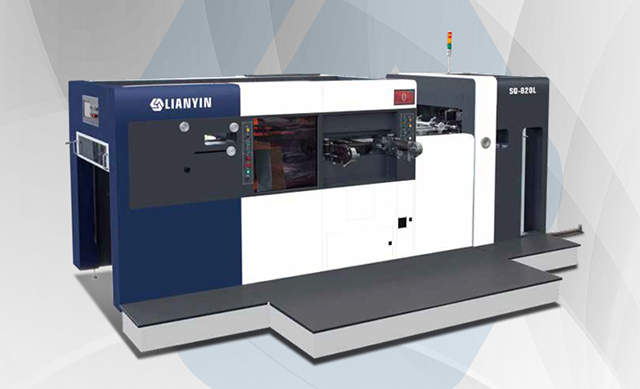
Automated packaging material die cutters are essential converting machines in the modern packaging industry.
They enable high-speed, high-precision cutting, creasing, punching and shaping of a wide variety of packaging
materials, including corrugated board, folding cartons, paperboard, plastic films, foam and flexible packaging substrates.
This in-depth industry guide is designed for purchasing managers, sourcing agents, distributors and
OEM/ODM clients looking to understand automated packaging material die cutter technology,
typical specifications, configuration options, and how to evaluate wholesale manufacturers, suppliers and factories.
The content below is 100% generic and industry-focused, without reference to any specific company names.
It can be used as an SEO-friendly resource for B2B marketplaces, industrial directory pages,
packaging machinery blogs and category landing pages.
An automated packaging material die cutter is a specialized machine that uses a
cutting die to convert flat packaging materials into finished or semi-finished shapes.
These machines are widely used for production of cartons, boxes, inserts, blister cards,
labels, display stands and other packaging components.
Unlike manual or semi-automatic die cutters, automated die cutters are equipped with:
Automated packaging material die cutters deliver improved productivity, consistency and
cost efficiency, making them the preferred choice for medium to high volume packaging production
in printing houses, converting plants, packaging factories and contract packers.
Industry-leading automated die cutters perform multiple functions within a single pass:
Advanced models combine these functions with in-line printing, hot foil stamping or digital finishing,
enabling fully integrated automated packaging material converting lines.
Wholesale manufacturers and suppliers of automated packaging material die cutters usually
offer several machine categories, each optimized for specific materials, formats and production volumes.
Flatbed die cutters use a flat platen and a flat die board. They are widely used for:
Flatbed automatic die cutters typically provide superior cutting accuracy and strong creasing performance,
which is important for premium packaging, pharmaceutical boxes, cosmetic cartons and high-graphic retail packaging.
Rotary die cutters use cylindrical dies. They are commonly used in:
Rotary systems are ideal for ultra-high throughput where speed and continuous operation are more critical than the
finest possible cutting accuracy. Automated rotary die cutters are often integrated into full corrugated box making lines.
Sheet-fed automated die cutters process pre-cut sheets of paperboard, cardboard or plastic.
They are common in commercial printing and folding carton factories.
Roll-fed automated die cutters process material from a roll, frequently used for labels, flexible packaging
and continuous web substrates. Roll-fed systems may integrate slitting, laminating and rewinding functions.
Emerging technology includes digital or hybrid automated packaging die cutters that use laser cutting or
digital knife tools instead of conventional steel rule dies. These are suitable for:
While capital costs can be higher, digital die cutters remove the need for physical die manufacturing and storage,
offering quick changeover and flexible design capabilities.
Automated packaging material die cutters are used across many packaging segments. Common applications include:
For distributors and purchasing teams, identifying the main material type and end product application
is the first step in selecting the right automated packaging material die cutter configuration.
Industry-leading automated packaging material die cutter manufacturers and factories emphasize several key benefits:
When comparing wholesale automated packaging material die cutters from different factories and suppliers,
buyers should pay close attention to the following technical specifications.
| Parameter | Description | Typical Range (for mid-size automated die cutters) |
|---|---|---|
| Max Sheet Size | Maximum sheet dimensions the machine can process (width × length). | From 750 × 530 mm up to 1650 × 1200 mm |
| Min Sheet Size | Minimum sheet dimensions, important for smaller packaging formats. | Approx. 350 × 270 mm or lower depending on model |
| Max Mechanical Speed | Maximum strokes per hour (SPH) for flatbed; m/min for rotary machines. | 5,000 – 9,000 sheets/hour (flatbed); 150 – 300 m/min (rotary) |
| Cutting Pressure | Maximum die cutting pressure or tonnage. | 150 – 600 tons depending on format and application |
| Material Thickness | Supported thickness range of materials. | Typically 0.1 – 4 mm for paperboard; up to 8 mm for corrugated |
| Feeding Type | Sheet-fed or roll-fed automatic feeding system. | High-pile feeder or continuous roll feeder |
| Registration Accuracy | Print-to-cut alignment accuracy. | ±0.1 – ±0.3 mm depending on configuration |
| Power Requirement | Total installed power and supply voltage. | Typically 12 – 40 kW, 3-phase 380–480 V |
| Air Consumption | Compressed air needed for stripping, ejectors and pneumatics. | Approx. 0.3 – 0.8 m³/min at 6 bar |
| Feature | Function | Benefits for Packaging Material Die Cutting |
|---|---|---|
| Non-Stop Feeder | Allows continuous sheet feeding while reloading stack. | Reduces downtime and increases net output. |
| Non-Stop Delivery | Continuous piling of finished blanks without stopping the machine. | Improves productivity and supports long runs. |
| Automatic Stripping Station | Removes waste skeleton and small pieces from finished blanks. | Reduces manual labor and speeds up post-press operations. |
| Blanking Station | Separates and stacks counted blanks automatically. | Delivers ready-to-pack piles for folding, gluing or packing. |
| Pre-Make-Ready Table | Allows offline preparation of dies and make-ready materials. | Minimizes setup time between jobs. |
| Camera Registration | Optical system for precise alignment of printed graphics. | Ideal for high-value printed packaging where tight tolerances are required. |
| Remote Diagnostics | Online monitoring and troubleshooting via network connection. | Reduces maintenance response times and downtime. |
| Integration with ERP/MIS | Data interface for job scheduling and production reporting. | Supports smart factory and Industry 4.0 initiatives. |
Automated packaging material die cutters from leading factories can handle a broad spectrum of substrates.
Material compatibility is crucial when evaluating potential wholesale suppliers.
| Material Type | Typical Thickness / Basis Weight | Typical Packaging Applications |
|---|---|---|
| Paper | 60 – 400 gsm | Labels, leaflets, paper sleeves, paper inserts, light folding cartons. |
| Paperboard / Folding Carton Board | 200 – 800 gsm | Retail cartons, pharmaceutical boxes, cosmetic cartons, consumer goods packaging. |
| Corrugated Board | E, F, B, C, BC, EB flute single and double wall | Shipping boxes, e-commerce mailers, shelf-ready packaging, displays. |
| Laminated Board | Paper/PET, Paper/Alu, Paper/PE composites | Premium packaging, liquid packaging, barrier packaging, specialty boxes. |
| Plastic Sheets (PET, PVC, PP, PS) | 0.1 – 1.5 mm (typical) | Blister cards, transparent boxes, clamshell inlays, thermoformed packaging components (after forming). |
| Flexible Films | 10 – 200 microns | Pouches, lids, sachets, flexible packaging shapes (mainly on rotary or digital die cutting systems). |
| Foam and Cushioning Materials | 2 – 20 mm and above | Protective inserts, cushioning pads, product-specific holders. |
Buyers should confirm with each automated die cutter manufacturer or supplier whether
the proposed model is certified and tested for the exact substrate combinations required.
Selecting reliable wholesale automated packaging material die cutter manufacturers and suppliers
is critical for long-term production stability. Although specific company names are not listed here,
buyers can use the following general criteria.
The table below provides a generic comparison of three representative sizes of automated packaging material die cutters.
These do not refer to specific brands, but illustrate how technical configurations typically scale.
| Model Category | Max Sheet Size (mm) | Min Sheet Size (mm) | Max Speed (sheets/h) | Max Cutting Pressure (tons) | Material Range | Main Applications |
|---|---|---|---|---|---|---|
| Small Format Automated Die Cutter | 750 × 530 | 350 × 270 | 7,500 | 150 | Paper 100–400 gsm, Board up to 1.5 mm | Pharmaceutical cartons, cosmetics boxes, small folding cartons, labels. |
| Medium Format Automated Die Cutter | 1060 × 760 | 400 × 350 | 8,000 | 250–300 | Paperboard up to 2 mm, Light corrugated E/F flute | Food and beverage cartons, retail packaging, medium-size corrugated inserts. |
| Large Format Automated Die Cutter | 1650 × 1200 | 650 × 500 | 5,000–6,000 | 400–600 | Corrugated up to double-wall BC, Heavy paperboard | Shipping boxes, large displays, e-commerce packaging, industrial packaging. |
When sourcing automated packaging material die cutters from wholesale factories,
buyers can often configure machines with optional modules to optimize throughput and flexibility.
| Optional Module | Description | Packaging Industry Benefit |
|---|---|---|
| Pre-Feeder | Automatic device that pre-stacks sheets and feeds them into the high-pile feeder. | Ideal for heavy corrugated sheets and long-run carton jobs. |
| Log Stacker | Stacks blanks in logs or bundles for easier handling and strapping. | Reduces manual stacking time and improves downstream logistics. |
| Automatic Palletizer | Robotic or mechanical system that arranges finished bundles onto pallets. | Automates end-of-line operations and reduces manual labor. |
| Waste Conveyor | Conveyor system to collect and remove waste skeletons and scrap. | Keeps production area clean and reduces handling time. |
| In-line Inspection System | Camera-based system to detect missing sheets, mis-registered prints or cutting defects. | Improves quality control for high-value packaging runs. |
| Hot Foil Stamping Unit | Allows hot foil stamping and die cutting in a single pass. | Adds metallic effects and security features to premium packaging. |
| Embossing/De-Embossing Kit | Specialized tools and plates for relief embossing jobs. | Enhances brand impact and tactile effects on cartons. |
Although design details differ between manufacturers, the typical workflow of an automated packaging die cutter is similar:
Reliable operation of automated packaging material die cutters depends on structured preventive maintenance.
Wholesale buyers and end users should work with suppliers to establish maintenance plans.
Leading automated die cutter factories often provide maintenance manuals, recommended spare parts lists and service interval charts,
enabling distributors and end users to maximize machine uptime and protect their investment.
The automated packaging material die cutter sector continues to evolve, driven by market demands for
higher performance, sustainability and digital integration.
To summarize, buyers working with industry-leading wholesale manufacturers, suppliers and factories can follow this checklist:
By following this structured approach, packaging converters, printers and industrial buyers can identify the
most suitable automated packaging material die cutter solutions from global wholesale suppliers and factories,
ensuring reliable, high-quality and cost-effective packaging production.
Automated packaging material die cutters are a core technology in modern packaging production lines.
Combining high-speed operation, precise registration, strong cutting pressure and intelligent automation,
these machines enable efficient converting of paperboard, corrugated board, plastics and other packaging materials
into finished packaging components.
For B2B platforms, industry portals, blogs and directory pages focusing on
automated packaging material die cutter manufacturers,
wholesale die cutter suppliers and packaging machinery factories,
presenting clear, detailed and SEO-friendly information about technical features, advantages and selection criteria
helps attract qualified buyers and support informed purchasing decisions.
This comprehensive, generic guide can be adapted and combined with specific product listings,
technical datasheets, videos and case studies to build high-ranking, content-rich landing pages
in the automated packaging material die cutter segment.
```
رقم الاتصال +86 18713883276(نفس الواتس اب) البريد: tslianshun@126.com
العنوان: قرية CAI he dong، مدينة CAI ting Qi AO، مقاطعة Y UT Ian، مدينة Tangshan، مقاطعة Hebei
حقوق الطبع والنشر © 2025 Tangshan Lianshun Printing Machinery Manufacturing Co., Ltd. جميع الحقوق محفوظة


يستخدم هذا الموقع ملفات تعريف الارتباط لضمان حصولك على أفضل تجربة على موقعنا.

 English
 Español
 Portugues
 Pусский
 中文



 هاتف
تعليق
(0)